
TL;DR:
- Effective digital transformation requires reliable data, system integration, and strong leadership support.
- Core technologies like smart meters, digital twins, and AI can improve efficiency and reduce water loss.
- Organizational change, cybersecurity, and workforce training are key factors for successful implementation.
Water utility managers know the pressure well: aging infrastructure, rising demand, tighter regulations, and a growing mandate to reduce losses and improve service. Digital transformation offers a clear path forward, yet 55% of utilities face critical cybersecurity vulnerabilities that can derail progress when digitalization is approached without structure. The good news? A prioritized, practical checklist removes the guesswork. This article walks you through the essential steps, from building your data foundation to deploying advanced technologies, while addressing the real risks that cause most projects to stall.
Table of Contents
- Lay the foundation: Data, measurement, and integration
- Deploy core technologies: Smart metering, digital twins, and AI
- Mitigate risks: Cybersecurity, workforce, and change management
- Checklist in action: Priorities, quick wins, and measuring success
- Why digitalization in water utilities is more about people than technology
- Take your digitalization strategy further with proven solutions
- Frequently asked questions
Key Takeaways
| Point | Details |
|---|---|
| Start with data integrity | Building a reliable data and integration foundation is essential for digital transformation success. |
| Adopt proven technologies | Smart metering, digital twins, and AI provide significant operational and cost benefits when implemented thoughtfully. |
| Mitigate key risks | Address cybersecurity, training, and organizational change early to reduce barriers and ensure project success. |
| Focus on people first | Leadership and culture are just as important as technology in driving real and lasting digital transformation. |
Lay the foundation: Data, measurement, and integration
No digital strategy succeeds on shaky data. Before your organization considers AI analytics or digital twin simulations, the priority is establishing reliable, accurate measurement across your entire network. This is not optional groundwork. It is the difference between a transformation that delivers measurable outcomes and one that generates expensive noise.
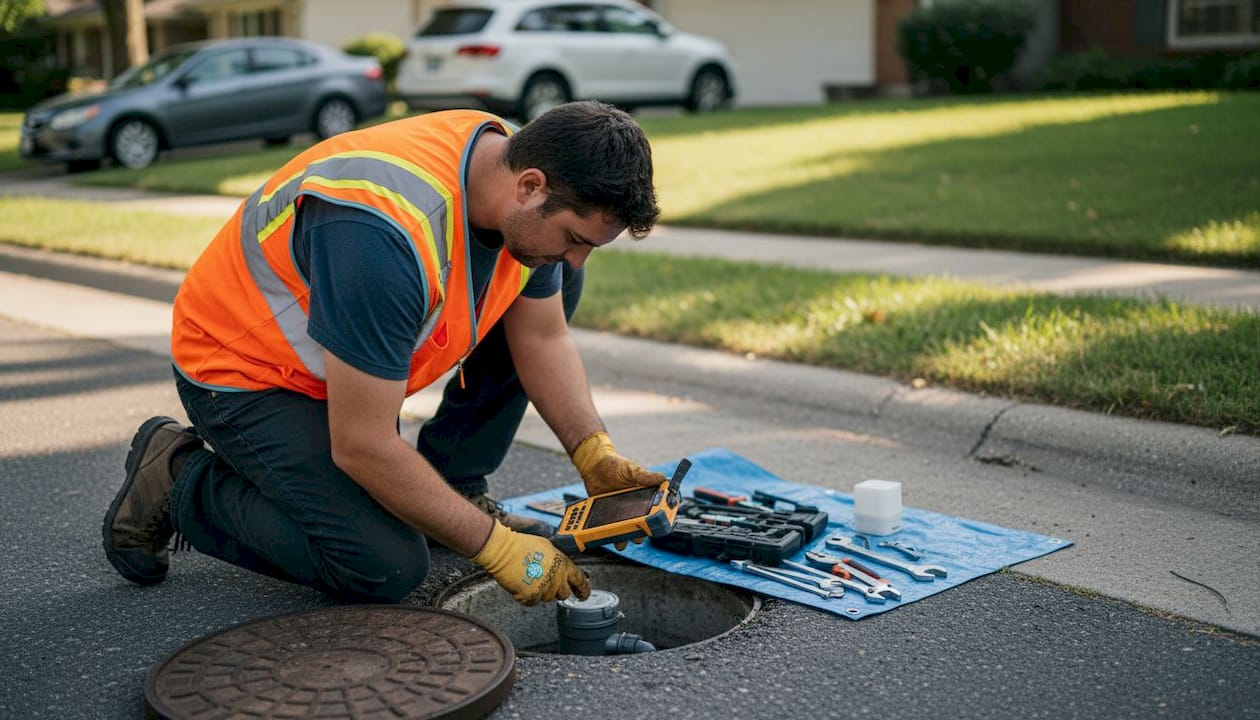
Smart meters, IoT sensors, and Advanced Metering Infrastructure (AMI) give operations teams real-time visibility into flow rates, pressure anomalies, and consumption patterns. A single sensor detecting an unexpected pressure drop at 2 a.m. can prevent a major main break, saving both water and repair costs. IoT data logging platforms make this kind of continuous, automated oversight practical even for utilities with limited field staff.
Integrating legacy systems is where many utilities struggle. Older SCADA platforms, billing systems, and asset management tools were not designed to share data. Breaking down these silos requires both technical middleware and clear governance about data ownership. The result, when done well, is a unified operational picture that every department can act on.
Key foundation steps to complete before advancing:
- Audit all existing meters and sensors for accuracy and coverage gaps
- Map data flows between SCADA, billing, and asset management systems
- Identify and resolve integration conflicts with legacy infrastructure
- Establish data quality standards and validation protocols
- Align on a single source of truth for operational data
Pro Tip: Prioritize universal data standards such as WaterML or OPC-UA from the start. Standardized formats make it far easier to add new technologies later without costly re-engineering.
“Accurate measurement and integration should come before AI or digital twin deployments to prevent failure, and executive sponsorship is essential to sustaining momentum throughout the process.”
Explore water distribution basics for practical context on how measurement infrastructure supports network-wide visibility.
Deploy core technologies: Smart metering, digital twins, and AI
With a solid data foundation in place, utilities can move confidently into the technologies that power modern operations. Three stand out as core pillars: smart metering, digital twins, and AI and machine learning.
| Technology | Core benefit | Key use cases | Readiness check |
|---|---|---|---|
| Smart metering / AMI | Real-time consumption and leak data | Non-revenue water reduction, demand forecasting | Meter coverage, communication network |
| Digital twins | Virtual network simulation | Pressure management, infrastructure planning | Accurate GIS and hydraulic models |
| AI and ML | Predictive and prescriptive analytics | Predictive maintenance, anomaly detection | Clean historical data, labeled events |
IoT and AMI deployments can reduce non-revenue water loss by up to 50%, which represents a significant financial and operational recovery for most utilities. Digital twins extend this further by allowing network engineers to simulate interventions before committing resources in the field.
For AI in water utilities, readiness is the critical variable. AI models require clean, labeled historical data to produce reliable predictions. Deploying machine learning on top of inconsistent or incomplete data simply amplifies uncertainty rather than reducing it.
Key deployment steps for each technology:
- Smart metering: Start with highest-loss zones; validate data transmission reliability before expanding coverage
- Digital twins: Build from verified GIS data; validate hydraulic model accuracy against real network behavior
- AI and ML: Define specific use cases first (e.g., burst detection); curate training data sets; pilot before scaling
Always verify compatibility with your existing SCADA and IT infrastructure before procurement. Smart metering use cases show that integrated data platforms, where sensor data, analytics, and operational dashboards connect seamlessly, are what allow utilities to extract full value from each technology layer.
Mitigate risks: Cybersecurity, workforce, and change management
Technology deployment without risk management is a liability. Three risk categories consistently derail water utility digitalization: cybersecurity vulnerabilities, workforce skills gaps, and organizational resistance to change.
The cybersecurity risk is acute. 55% of inspected utilities have critical security gaps, according to EPA and AWWA assessments using NIST-based frameworks. As operational technology connects to IT networks, the attack surface expands. A breach targeting a water treatment control system is not just an IT incident. It is a public health event.
Practical mitigation steps every utility should take:
- Conduct a formal cybersecurity assessment using EPA cybersecurity guidance before any new tech procurement
- Segment operational technology networks from corporate IT systems
- Implement role-based access controls and multi-factor authentication
- Develop and regularly test an incident response plan
- Invest in ongoing staff training for social engineering and phishing awareness
Pro Tip: Schedule a cybersecurity audit as the very first action item, before issuing any RFPs for digital solutions. Vulnerabilities discovered mid-deployment are far more expensive to remediate.
Workforce readiness is equally important and often underestimated. Digital tools only deliver value when operators understand how to use them and trust their outputs. Structured upskilling programs, internal change champions, and phased rollouts that give staff time to adapt are all proven strategies. Review digitalization case studies to see how other utilities have managed this transition effectively.
Change resistance is usually rooted in uncertainty. Clear communication about why transformation is happening, what roles will look like, and how success will be measured turns skeptics into advocates over time.
Checklist in action: Priorities, quick wins, and measuring success
Theory becomes transformation when you have a sequenced action plan. Utilities with agile governance and executive buy-in are measurably more likely to achieve their digitalization goals than those that treat it as a purely technical project.
Here is a sequenced checklist for utility managers:
- Assess readiness: Audit data quality, system integration gaps, cybersecurity posture, and workforce skills
- Secure executive sponsorship: Align leadership on goals, budget, and timelines before procurement begins
- Pilot a quick win: Deploy smart metering or IoT leak detection in a defined zone to build confidence and gather data
- Integrate and validate: Connect new tools to existing SCADA and data platforms; confirm data accuracy
- Scale strategically: Expand successful pilots network-wide using lessons learned from the initial deployment
- Embed predictive maintenance strategies: Use operational data to shift from reactive to proactive asset management
- Monitor, report, and iterate: Track performance metrics continuously and adjust based on outcomes
Tracking the right metrics keeps momentum and proves ROI to stakeholders.
| Success metric | What to measure | Target outcome |
|---|---|---|
| Non-revenue water | Percentage of total water produced | Reduction toward sector benchmark |
| System downtime | Hours of unplanned outages per year | Year-on-year decrease |
| Cybersecurity incidents | Number of detected intrusion attempts | Containment rate and response time |
| Maintenance cost per asset | Annual spend per managed asset | Measurable cost reduction post-AI |
| Customer satisfaction | Response times and complaint volumes | Improvement against baseline |
Celebrate early wins deliberately. A successful pilot that cuts leakage by 15% in one district gives your team tangible proof that the approach works. That momentum matters when scaling to the full network.
Why digitalization in water utilities is more about people than technology
We have observed a consistent pattern across utility digital transformation projects: the technology rarely fails first. People and culture do. Despite the availability of mature IoT platforms, proven AI models, and robust integration tools, only roughly 30% of utilities fully achieve their stated digitalization goals. The barrier is almost never the sensor or the software.
Executive sponsorship that fades after the launch event, middle managers who protect departmental data silos, and frontline operators who distrust algorithm-generated alerts are the real obstacles. The utilities that succeed treat their digital transformation journey as an organizational change program that happens to use technology, not the other way around.
Our position is that a people-first implementation strategy will consistently outperform a technology-first rollout over a three to five year horizon. Invest in communication, in training, and in building internal advocates at every level. The sensors and platforms are ready. The question is whether your organization is.
Take your digitalization strategy further with proven solutions
The checklist above gives you a clear starting point. Putting it into practice requires tools built specifically for water utility operations, with the reliability and integration depth that real networks demand.

At ThingsLog, we provide Intelligent water remote IoT monitoring and automation solutions for utilities ent with configurable IoT data loggers, real-time sensors, and a cloud and mobile platform designed to connect legacy infrastructure with modern analytics. From smart metering pilots to full network automation, our solutions scale with your program. See how it works and discover how utilities are already achieving measurable reductions in non-revenue water, downtime, and operational costs.
Frequently asked questions
What is the first step to digitalizing a water utility?
Begin with accurate data collection and integration of legacy systems before adopting advanced digital tools. Foundation work on measurement and data integration prevents costly failures at later stages.
How do utilities manage cybersecurity risks during digitalization?
Utilities should run formal assessments using NIST-based tools from EPA and AWWA, address identified vulnerabilities, and embed cybersecurity controls from the very start of any digitalization project.
What are the quick wins for digitalizing water operations?
Launching a pilot in smart metering or predictive maintenance in a defined zone delivers fast results and builds organizational confidence. IoT and AMI deployments can cut non-revenue water loss by up to 50% in targeted areas.
Why do some digital transformation projects fail in water utilities?
Most failures stem from lack of executive support and resistance to organizational change, not from technology limitations. Cultural readiness and leadership alignment are as critical as any platform or sensor deployed.


